Collective Worship
The Nature of Collective Worship
We believe that Christian worship in a Catholic school names and celebrates God’s presence in our lives. It is concerned with giving glory, honour, praise and thanks to God. It is our loving response, in word and action, to God’s invitation to enter into a relationship, made possible through the work of Jesus Christ and the witness of the Holy Spirit.
The Place of Collective Worship in the Life of our School
Worship in St. Mary’s school is more than just a legal requirement. It is an integral part of school life and central to the Catholic tradition.
Collective Worship takes into account the religious and educational needs of all who share in it:
- Those who form part of the worshipping community in church;
- Those for whom school may be their first and only experience of church;
- Those from other Christian traditions – or none;
- Those from other faith backgrounds.
Implementation
We believe that Collective Worship in our school aims to provide opportunities for all pupils and staff to:
- Contemplate something of the mystery of God
- Reflect on spiritual and moral issues
- Explore their own beliefs
- Respond to and celebrate life
- Experience a sense of belonging and develop community spirit
- Develop a common ethos and shared values
- Enrich religious experience
- Grow in liturgical understanding and development
- Reinforce prayers which are part of the Catholic tradition
- Reinforce positive attitudes
- Participate fully
- Take time out ‘to wonder at’, ‘to come to terms with’ and ‘to give worth to.’
Principles
All Acts of Worship in this school will:
- Give glory and honour to God;
- Be an enriching experience, fundamental to the life of the school and its Catholic character;
- Develop in pupils skills that enable them to prepare, organise and lead worship rather than always participating or contributing in a token way;
- Give pupils positive liturgical experiences, appropriate to their age, aptitude and family backgrounds in order to prepare them for the liturgical life of the Church.
In order to do this, celebrations will:
- be kept small wherever possible or appropriate to help to personalise the experience;
- be short and appropriately paced (children’s attention span lasts in any one activity for an average of one minute per year of life i.e., 5-6 mins. For Key Stage 1 and 7-10 mins. For Key Stage 2
- be simple, including a range of experiences offered in a variety of groupings and in a variety of settings (for example, the classroom, hall)
- be held in a special, prayerful atmosphere
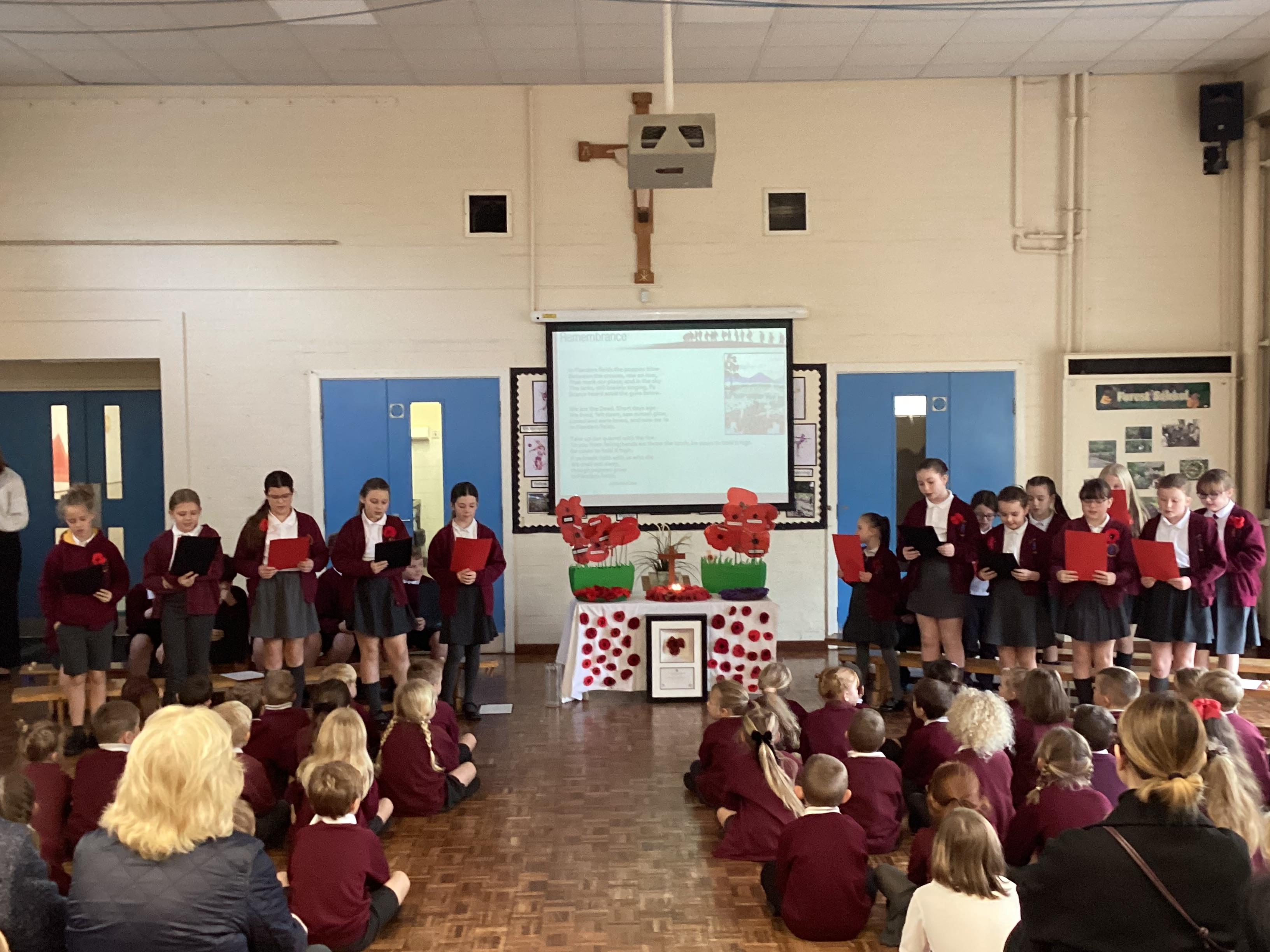
Remembrance Day 2024
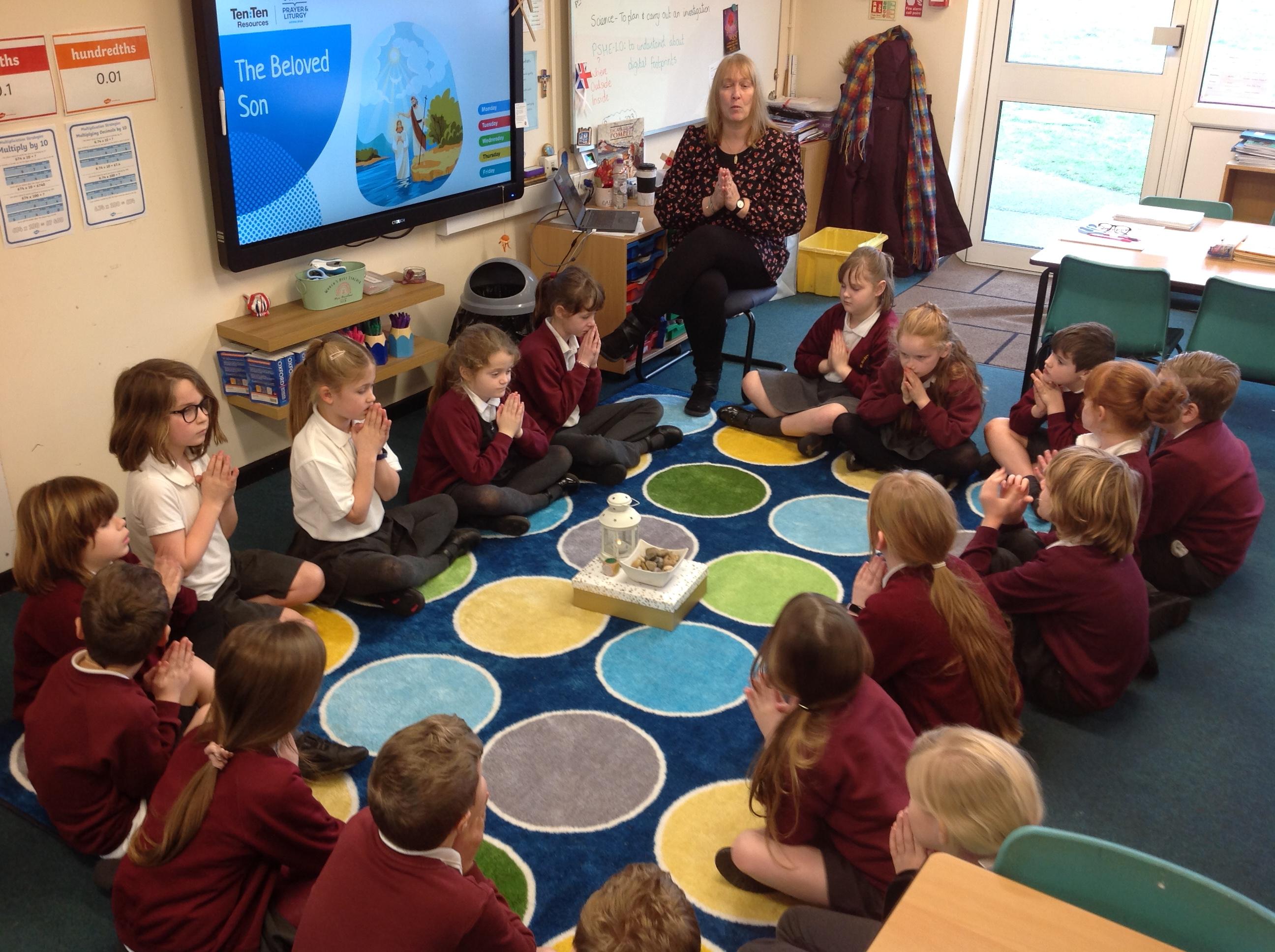
Class Collective Worship